


Forensic Science with Integrated Master's - MSci
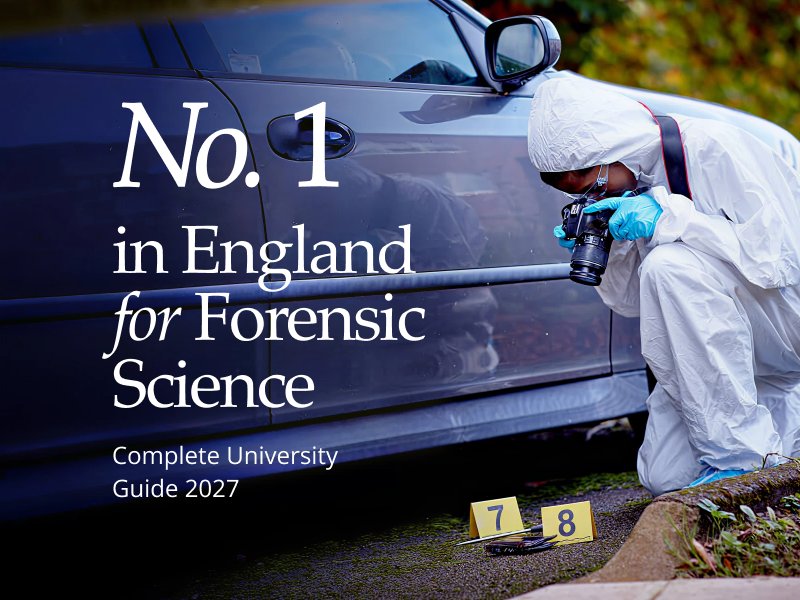
The Forensic Science with Integrated Master’s – MSci is one of the leading programmes in the UK, with the University ranked No.1 in England for Forensic Science (Complete University Guide 2027). This intensive programme is distinguished by its academic excellence and strong links to the professional field, equipping students with practical skills and knowledge to succeed in their future careers.

Key benefits of the programme

Degree from Keele University, ranked No.1 in England for Forensic Science (Complete University Guide 2027).
The programme provides two specialisation tracks: Forensic Graphology and Environmental Forensics.
Acquisition of technical skills with in-depth study in forensic and analytical sciences techniques, with application to real-world samples and evidence.
Comprehensive approach to the forensic process: from the crime scene to the laboratory and the final evaluation in court.
Development of practical, analytical, and quantitative skills, with emphasis on experimental techniques and the scientific assessment of evidence.
Strengthening the ability to communicate scientific findings clearly and effectively, both to expert audiences and to those without a scientific background.
UNIVERSITY
Keele University
DURATION IN YEARS
4 Years (FT)
Language
English/Greek
Study at Keele Greece

Programme Description
The aim of the programme is to provide solid theoretical foundation combined with practical training in advanced analytical techniques employed in crime investigation, collection and evaluation of evidence, and its interpretation within the framework of the justice system.
The programme covers key professional domains, including forensic chemistry, analytical science, forensic biology and criminal science.
Through practical exercises, laboratory practice and case studies, students gain experience in applying science to real-world crime scenarios, while understanding the legal, ethical and social context in which a forensic scientist operates.

MODULES PER YEAR
Year 1 (semester 1)
- Skills and Practice in Forensic Science Project in English (annual module – part 1)
This module includes: scientific writing and study skills for forensics; investigative skills (literature search, review, and referencing); principles and regulations of forensic practice – codes, standards and accreditation; chain of custody and preservation of exhibits integrity; personal protective equipment and infection prevention protocols; basic laboratory techniques and practical skills in crime scene investigation; analysis, interpretation and presentation of criminal investigation data; integration of forensic practice with criminal law; quality management and international standards in the forensic field; development of personal skills portfolio and professional note-taking - Forensic Chemistry and Analysis: Molecules under investigation (annual course – part 1)
This module includes: basic principles of atomic and molecular structure, and chemical bonding; thermochemistry and kinetics with forensic applications (chain reactions, explosives, combustion); organic and inorganic compounds and their forensic applications (glass, cement, polymers, drugs, DNA); qualitative and quantitative forensic analysis of organic and inorganic substances; separation and sample preparation techniques; fundamentals of polarizing microscopy and microspectroscopy, spectroscopy techniques (IR, UV-Vis, AA, ICP, Fluorescence, Raman) and their applications; principles of chromatography methods (TLC); statistical methods and data analysis in forensic contexts; and laboratory documentation, reporting and results communication skills - Forensic Identification and Investigation: From Evidence to DNA (annual course – part 1)
This module includes: introduction to forensic science and its historical development; main types of biological evidence and their forensic significance; use of biological molecules for individual identification; basic principles of inheritance and application of genetic markers; forensic microscopy and laboratory techniques (fingerprinting, blood grouping, electrophoresis, DNA analysis); role of the coroner and presentation of evidence in court; crime scene management and investigation; applications of forensic science within the legal system; forensic data analysis and interpretation; and development of skills for recording, reporting, and presenting results - Crime Scene Investigation (CSI)
This module includes: scientific principles of forensic science and their application to physical evidence; blood dynamics and spatter analysis; forensic imaging and trace evidence amplification; impression evidence analysis and interpretation (including fingerprints, footwear impressions, and footprints); techniques relevant to crime scene investigation; introduction to forensic photography; design and organisation of experiments in relation to forensic cases; analysis and presentation of experimental data; and development of skills for accurate recording, reporting, and communication of results to specialised audiences.
Year 1 (semester 2)
- Skills and Practice in Forensic Science (annual module – part 2)
This module includes: scientific writing and study skills for forensics; investigative skills (literature search, review, and referencing); principles and regulations of forensic practice – codes, standards and accreditation; chain of custody and preservation of exhibits integrity; personal protective equipment and infection prevention protocols; basic laboratory techniques and practical skills in crime scene investigation; analysis, interpretation and presentation of criminal investigation data; integration of forensic practice with criminal law; quality management and international standards in the forensic field; development of personal skills portfolio and professional note-taking - Forensic Chemistry and Analysis: Molecules under investigation (annual course – part 2)
This module includes: basic principles of atomic and molecular structure, and chemical bonding; thermochemistry and kinetics with forensic applications (chain reactions, explosives, combustion); organic and inorganic compounds and their forensic applications (glass, cement, polymers, drugs, DNA); qualitative and quantitative forensic analysis of organic and inorganic substances; separation and sample preparation techniques; fundamentals of polarizing microscopy and microspectroscopy, spectroscopy techniques (IR, UV-Vis, AA, ICP, Fluorescence, Raman) and their applications; principles of chromatography methods (TLC); statistical methods and data analysis in forensic contexts; and laboratory documentation, reporting and results communication skills - Forensic Identification and Investigation: From Evidence to DNA (annual module – part 2)
This module includes: introduction to forensic science and its historical development; main types of biological evidence and their forensic significance; use of biological molecules for individual identification; basic principles of inheritance and application of genetic markers; forensic microscopy and laboratory techniques (fingerprinting, blood grouping, electrophoresis, DNA analysis); role of the coroner and presentation of evidence in court; crime scene management and investigation; applications of forensic science within the legal system; forensic data analysis and interpretation; and development of skills for recording, reporting, and presenting results - Criminal Justice: Process, Policy, Practice
This module includes: concept and definition of criminal justice; historical development and evolution of the criminal justice system; organisations and institutions involved in criminal justice (police, courts, prisons, and surveillance services); roles and responsibilities of institutional and non-institutional bodies; victimisation, harm, and public protection; the justice process and foundation of guilt; punishment and alternative non-custodial measures; policies and practices of criminal justice within social and economic contexts; comparative and sociological approaches to criminal justice; and the relationship between crime, victimisation, and social divisions
Year 2 (semester 3)
Compulsory Modules
- Genetics in Forensic Science: DNA and crime
This module includes: nucleic acid hybridisation and its applications, polymerase chain reaction (PCR); DNA sequencing and DNA profiling in forensic science; low-template DNA (LTDNA) typing – advantages and limitations; population genetics and profiling; DNA sources – collection, storage and analysis with emphasis on infection avoidance; polymorphism types and DNA genealogy markers; presentation of DNA evidence in court; laboratory techniques (DNA gel electrophoresis, PCR); applied case studies and cross-examination exercises - Chemical Analysis and Detection
This module includes: quantitative data analysis and processing; principles of elemental analysis and mass spectrometry; spectroscopic techniques and their capabilities in the analysis of composite samples; chromatographic methods (gas and liquid) and their applications in forensic contexts; combined use of spectroscopy and chromatography for material characterisation; analysis of unknown samples using GC-MS; quality assurance and regulatory standards in forensic laboratories; evaluation and critical appraisal of scientific literature; and reporting and presentation of forensic analytical research results - Policing and Law Enforcement
This module includes: concepts and definitions of policing and the police; historical evolution and development of policing; modern organisation of public police services in Greece and internationally; police culture and professional identities; policing strategies, approaches, and methods; police powers and accountability mechanisms; policing in multicultural and socially unequal contexts; pluralism in the provision of policing; transnational cooperation in policing; and future prospects for policing and law enforcement - Justice and Crime
This module includes: qualitative and quantitative research methods in forensic science; design and development of research projects; formulation of research questions and selection of appropriate research strategies; theoretical approaches and theory-methods relationship in forensic research; practical aspects of conducting qualitative and quantitative research; ethical issues and conduct in forensic research; analysis of different types of data and critical evaluation of results, and application of social research to forensic issues
Specialisation Module: Forensic Graphology
- Forgeries, Counterfeiting, and Imitations
This module includes: theory and practice of forensic analysis of forged documents, counterfeit items, and imitations; security of documents and cultural heritage; identity verification; analysis of counterfeit medicines and food products; chemical and physicochemical examination of materials (inks, paper, pharmaceutical and food samples); development of skills for recording, reporting, and writing forensic reports - Digital Forensics
This module includes: basic principles of digital forensic research; collection and management of digital evidence; laboratories and data analysis tools; operating systems (Windows, Linux, iOS); mobile devices networks, multimedia, social media and the internet; ISO 17025 standards and accreditation procedures; applications of digital forensics in the legal framework
Specialisation Module: Environmental Forensics
- Forensic Anthropology: Decomposition and Skeletal Analysis (annual module – part 1)
This module includes: post-mortem decomposition process and post-mortem estimate of time of death; environmental and human factors affecting decomposition; analysis of skeletal remains for age, sex, stature and origin; skeletal morphology and dental anthropology for biological profile; trauma localisation and identification (antemortem, perimortem, post-mortem); forensic entomology and use of insects in determining time of death; methodologies for searching and retrieving human remains (scattered or buried), skeleton identification and bone aspect; role and practices of forensic anthropologist on site and in the morgue
Year 2 (semester 4)
Compulsory Modules
- Crime Scene : Blood, Marks and Fingerprints
This module includes: blood dynamics and spatter analysis; forensic imaging and its applications; chemical and physical enhancement of trace evidence and impressions (fingerprints, footwear, impressions); techniques of analysis and interpretation of fingerprints in different forensic contexts; introduction to forensic photography; development of laboratory skills and numerical methods for data analysis; design and execution of experiments related to forensic hypotheses; application of theoretical principles to practical crime scene investigation. - Drugs and Substance Abuse
This module includes: legal framework and European legislation on drugs and alcohol; controlled and illegal drugs – structure, properties, effects and uses; basic principles of pharmacology and pharmacodynamics; mode of action and metabolism of drugs; practical methods of drug identification and characterisation; presumptive tests and spectroscopic techniques for sample analysis; laboratory identification of drugs and alcohol in biological samples; analysis and interpretation of data in a forensic context; preparation and presentation of professional expert reports
Specialisation Module: Environmental Forensics
- Forensic Anthropology: Decomposition and Skeletal Analysis (annual module – part 2)
This module includes: post-mortem decomposition process and post-mortem estimate of time of death; environmental and human factors affecting decomposition; analysis of skeletal remains for age, sex, stature and origin; skeletal morphology and dental anthropology for biological profile; trauma localisation and identification (antemortem, perimortem, post-mortem); forensic entomology and use of insects in determining time of death; methodologies for searching and retrieving human remains (scattered or buried), skeleton identification and bone aspect; role and practices of forensic anthropologist on site and in the morgue
Year 3 (semester 5)
Compulsory Modules
- From the Crime Scene to the Court (Evidence Interpretation, Evaluation & Presentation) – annual module (part 1)
This module includes: fundamental role of the crime scene in the forensic and legal process; evidence recovery and management – including control, continuity, contamination prevention, and quality assurance; experiment design and application of analytical techniques; interpretation and evaluation of forensic data using statistical methods and databases (including Bayesian approaches); preparation of professional forensic reports; development of oral presentation skills for courtroom settings; training expert witnesses and defending scientific conclusions in a simulated judicial scenario - Evidence of Explosive Materials and Arson
This module includes: chemical and physical properties of explosive materials; classification of explosives and functional groups; thermochemistry of explosives and their decomposition products; improvised explosive devices and scene investigation; analysis of explosives and post-blast residues; principles of combustion and fire dynamics; investigation of arson scenes and evidence analysis; detection and characterization of ignitable liquids; strategies for collecting and presenting fire-related evidence; logical interpretation of scientific findings; application of probability and Bayesian reasoning to forensic evaluation; presentation of scientific conclusions and addressing misconceptions in court
Specialisation Module: Forensic Graphology
- Research Paper in Forensic Science (annual module – part 1)
This module includes: search and critical appraisal of research literature; analysis of strengths and limitations of contemporary issues in forensic science; assessment of the significance of forensic research for the discipline and society; development of scientific writing skills for journal articles; techniques for designing and website development to present research content; effective communication of scientific results to diverse audiences; writing and delivering a literature review; enhancement of independent research capabilities and scientific presentation skills - Forensic Evidence Assessments (Marks and Traces)
This module includes: documentation, photographic recording, and handling of forensic evidence; advanced techniques for trace evidence examination; professional and ethical standards in sample collection and analysis; presentation and critical communication of findings within a laboratory context
Specialisation Module: Environmental Forensics
- Advanced Biology in Forensic Science
This module includes: forensic entomology and its applications; handling and analysis of soft tissue remains in a forensic context; professional and ethical considerations in biological forensic research; forensic odontology and examination of dental evidence; the role of the forensic dental anthropologist; advanced applications of forensic DNA analysis; collection and analysis of biological forensic data in a laboratory setting; development of interdisciplinary skills for terrestrial and aquatic forensic investigations; preparation and critical evaluation of forensic reports - Research Paper in Forensic Science (annual module – part 1)
This module includes: search and critical appraisal of research literature; analysis of strengths and limitations of contemporary issues in forensic science; assessment of the significance of forensic research for the discipline and society; development of scientific writing skills for journal articles; techniques for designing and website development to present research content; effective communication of scientific results to diverse audiences; writing and delivering a literature review; enhancement of independent research capabilities and scientific presentation skills
Year 3 (semester 6)
Compulsory Modules
- From the Crime Scene to the Court (Evidence Interpretation, Evaluation & Presentation) – annual module (part 2)
This module includes: fundamental role of the crime scene in the forensic and legal process; evidence recovery and management – including control, continuity, contamination prevention, and quality assurance; experiment design and application of analytical techniques; interpretation and evaluation of forensic data using statistical methods and databases (including Bayesian approaches); preparation of professional forensic reports; development of oral presentation skills for courtroom settings; training expert witnesses and defending scientific conclusions in a simulated judicial scenario - Research Paper in Forensic Science (annual module – part 2)
This module includes: search and critical appraisal of research literature; analysis of strengths and limitations of contemporary issues in forensic science; assessment of the significance of forensic research for the discipline and society; development of scientific writing skills for journal articles; techniques for designing and website development to present research content; effective communication of scientific results to diverse audiences; writing and delivering a literature review; enhancement of independent research capabilities and scientific presentation skills - Forensic Toxicology
This module includes: fundamental principles of pharmacology and pharmacokinetics (ADME); introduction to forensic toxicology and its areas of application; analytical techniques (immunoassays, dash techniques, isotope ratios); legal aspects of toxicology and the role of the forensic analyst in the judicial process; autopsy and post-mortem procedures; sampling and quality assurance in the analysis of biological specimens; study of poisons and toxins (drugs, alcohol, metals, volatile compounds, natural toxins); interpretation and evaluation of toxicological data; application of case studies to real-world forensic scenarios
Specialisation Module: Forensic Graphology
- Migration, Crime, and Security
This module includes: migratory flows and their social implications; forensic science and society; critical appraisal of research literature; methodologies for review and scholarly writing; techniques for developing scientific articles and research-focused web content; development of scientific communication skills
Specialisation Module: Environmental Forensics
- Environmental and Wildlife Forensics
This module includes: theoretical foundations of environmental forensics; environmental and wildlife crimes at national and international levels; methods and procedures for investigating environmental and wildlife crimes; application of forensic science in legal investigations of environmental offences; case studies and theoretical approaches; practical field and laboratory exercises for environmental/wildlife trace evidence; data processing and visualization, group and individual reporting of results.
Year 4 (semester 7)
Compulsory Modules
- Investigative Skills in Forensic Science
This module includes: analysis and interpretation of forensic data; statistical methodologies and assessment of their application; critical appraisal of research literature; development of research proposals and project design; digital imaging and graphic techniques for scientific presentation; practical experience in conducting research under supervision; preparation for dissertation work; systematic understanding of contemporary methodologies in forensic research - Dissertation (annual module – part 1)
This module includes: selection and definition of a research topic; critical review and evaluation of relevant literature; design of a research proposal and methodology; experimental work and data analysis; assessment and application of research methods; writing and presentation of research findings; development of self-management and independent research skills; oral defence of scientific work; preparation and submission of a complete dissertation
Specialisation Module: Forensic Graphology
- Advanced Professional Skills (annual module – part 1)
This module includes: bias in forensic analysis and strategies for its mitigation; preparation of professional forensic reports; expert testimony in court; collection and examination of documents and manuscripts; analysis of inks and security features using filtered light; microscopic examination of documents; evaluation of digitally recorded signatures and non-original documents; influence of automated writing systems and robotics; application of inference scales in forensic handwriting analysis; specialised technical and non-invasive methods (UV, IR, ESDA) for detecting and analysing altered documents
Specialisation Module: Environmental Forensics
- Forensic Anthropology: Complex Crime Scenes, Recovery and Analysis
This module includes: advanced osteology and human skeletal analysis; differentiation between human and non-human remains; critical evaluation of forensic anthropology methods and ethical considerations; comparison of traditional and digital analysis techniques; diagnosis and interpretation of ante-mortem conditions and trauma; application of environmental indicators (botany, diatoms, entomology, animal traces); search and recovery of buried remains; practical experience in tomb excavation and virtual anthropological analysis.
Year 4 (semester 8)
Compulsory Modules
- Dissertation (annual module – part 2)
This module includes: selection and definition of a research topic; critical review and evaluation of relevant literature; design of a research proposal and methodology; experimental work and data analysis; assessment and application of research methods; writing and presentation of research findings; development of self-management and independent research skills; oral defence of scientific work; preparation and submission of a complete dissertation - Crime Investigation: From the Crime Scene to the Trial
This module includes: crime scene assessment and management; probative value and forensic reporting; legal framework and admissibility of evidence; logical assessment based on evidence type; preparation and delivery of report to court; role and ethics of expert witness, pre-trial procedures and case studies to present and defend scientific findings
Specialisation Module: Forensic Graphology
- Advanced Professional Skills (annual module – part 2)
This module includes: bias in forensic analysis and strategies for its mitigation; preparation of professional forensic reports; expert testimony in court; collection and examination of documents and manuscripts; analysis of inks and security features using filtered light; microscopic examination of documents; evaluation of digitally recorded signatures and non-original documents; influence of automated writing systems and robotics; application of inference scales in forensic handwriting analysis; specialised technical and non-invasive methods (UV, IR, ESDA) for detecting and analysing altered documents
Specialisation Module: Environmental Forensics
- Chemical Analysis in Forensic Science: Methodology and Assessment
This module includes: modern analytical techniques in forensic chemistry; calibration and use of standardised analytical instruments; sample preparation and laboratory measurements; data analysis and inference; strategies for the identification of unknown compounds in complex mixtures; application and limitations of cutting-edge methodologies in forensic analysis

Career Prospects
Career Prospects
Graduates of the programme may pursue careers in the following areas:

Forensic laboratories (Forensic Graphology and Environmental Forensics)
Data Analysis and Applied Research
Pharmaceutical industries
Diagnostic laboratories and non-governmental organisations with a legal focus.

Postgraduate Studies
Graduates of the Forensic Science with Integrated Master’s – MSci have the opportunity to pursue postgraduate studies in leading programmes in Greece or abroad.

Admission Requirements
Supporting Documents
• High school diploma (or other equivalent document) with a grade of 12 or higher
• Compulsory High School Subjects: Biology or Chemistry with a grade of 14 or higher
• An average grade in the four nationally examined subjects that is equal to or higher than the minimum admission grade. The minimum admission grade is calculated as 80% of the lowest average grade across all examined subjects within the relevant scientific field for the year in which the student sat the exams.
• Letters of Recommendation
• Copy of Identity Card
• Passport photos
• Keele Greece Enrolment Application
The evaluation of the supporting documents is complemented by a personal interview with the candidates.
• Equivalent Level 4 secondary education qualifications, as well as international baccalaureates granting access to universities in the country of graduation, are also accepted.
• For graduates before 2021–2022 or holders of A’ cycle degrees, the criteria of the parent institution apply.